Skip to content
Nadia LuongLiving Library
The House NLL–2026.012 Nadia Luong Living Library

As Close As You Ask

Nadia Luong

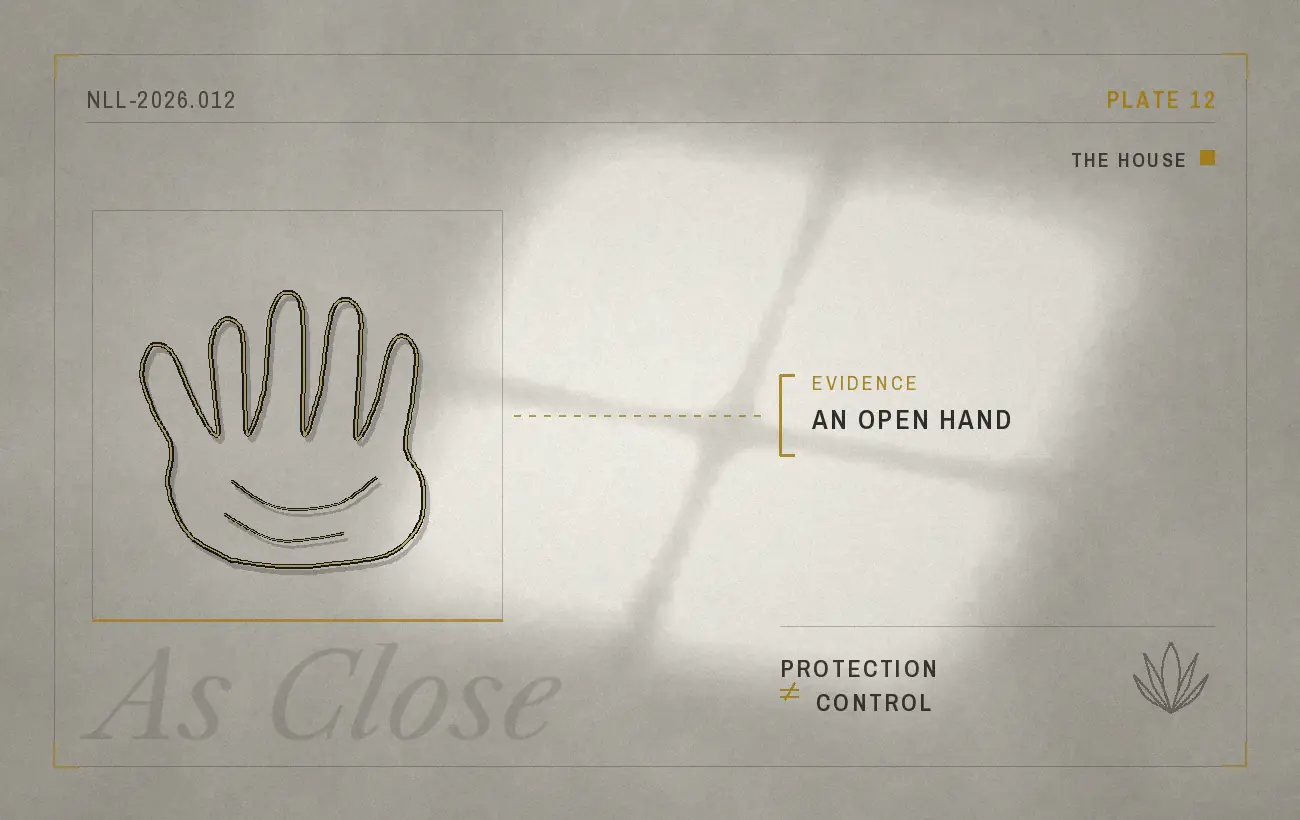
An open palm turned upward, and the difference between catching and choosing.

When you scraped your knee, I sat you on the bathroom counter, washed the gravel from your skin, pressed a Band-Aid over the red.
When you tipped from the curb, my hand was already there— the small of your back.
I moved the chair from the sharp corner.
Each danger had a size. Most fit inside my reach.
That is how the belief began:
watch closely enough and hurt might not arrive.
I would have taken the fever, the bruise, the nightmare—
anything I could move from your body into mine.
I thought sacrifice worked like padding:
enough of me around you and the world might strike softer.
Then you grew past the rooms I had made safe.
You found friends I did not choose, roads I could not inspect, dreams with no railing for me to test.
The dangers changed size—
a silence, a decision, a future I could not stand in front of.
And I understood what my hands had never needed to know:
breaking your fall was not the same as choosing where you walked.
Now when you lean toward something I cannot measure, the old reflex still arrives.
My hands lift between us.
Then you place your hand inside one of them—
not asking to be carried, not asking to be kept.
For one breath, I mistake the warmth for permission.
But you are not returning to the old shelter.
You are showing me where you are.
So I turn my palm upward and leave it there—
not a wall, not a net,
only a place you can reach without returning.
If you fall, I will come only as close as you ask—
not to gather your life back into my hands,
but to keep one open
so yours can find it without surrendering where you are going.

After reading the poem

As Close As You Ask examines the change from protecting a child to respecting the life they are learning to direct. Early dangers are concrete and within reach: scraped knees, sharp corners, falls. The speaker comes to believe that enough vigilance and sacrifice might keep hurt away. As the child grows, danger changes shape, becoming friends, decisions, and futures that cannot be inspected or prevented.

The poem turns when the speaker realizes that breaking a fall is not the same as choosing where someone walks. Love remains, but its form changes. The open hand is no longer a wall or a net. It becomes an offered place of return, available without requiring the child to surrender independence or move backward into an earlier version of safety.

What became visible

Protection≠Control
Support≠Direction
Closeness≠Return

Intellectual value

The poem identifies a transition in caregiving: as a child gains agency, love must move from prevention toward availability. Its intellectual value lies in separating support from control and showing that closeness can remain intact without requiring dependence, retreat, or surrender of direction.

© Nadia Luong · All rights reserved