
Skip to content
Nadia LuongLiving Library
What Was Believed NLL–2026.011 Nadia Luong Living Library

Before the Sky Darkened

A search for the hour it ended, and an eclipse that had already begun.

For years, I searched for the moment you left.
I believed there had to be a single hour— one conversation, one decision, one crossing from us to someone else.
I thought finding it would help me understand how a carefully built life could become a place I no longer recognized.
I believed I had given all I knew how to give:
a home, our children, the ordinary devotion of showing up day after day,
believing we were building the same future.
Long before I learned her name, a distance entered the room before either of us spoke.
Conversations lost their way.
The strange loneliness of lying beside someone who felt just beyond my reach.
I carried questions without answers, convincing myself love passes through arduous seasons.
Then came her name.
A truth I had spent years trying not to imagine, cutting through the life our children believed would always be there.
But I was never completely surprised.
There is a terrible relief in heartbreak— finally giving a name to something the heart had been grieving all along.
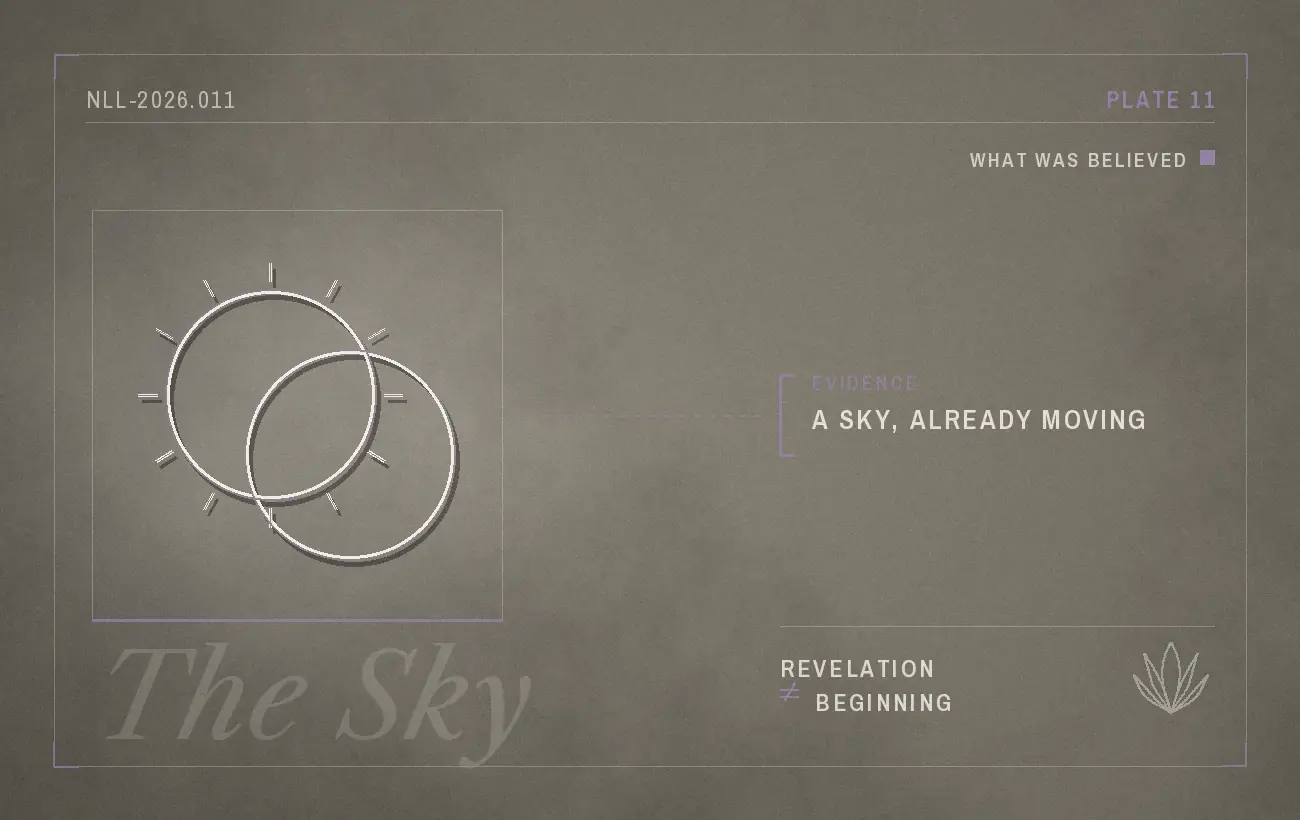
Years later, I understood the eclipse.
It does not begin when the sky grows dark.
By then, the heavens have been moving for longer than anyone can see.
The darkness is only the first visible sign of an alignment quietly changing all along.
She was never the eclipse.
She was only the shadow that revealed what had already passed between us.
The deepest betrayal was not that your heart found someone else.
It was discovering it had long ago stopped turning toward me.
By the time the sky darkened, we had already fallen out of alignment.
So I stopped asking why you left.
What appears to happen all at once has often been unfolding silently for years.
Love depends on two hearts choosing, again and again, to keep turning toward the same light.

After reading the poem

The speaker searches for a single moment that can explain the collapse of a shared life: one decision, one crossing, one identifiable departure. The later discovery of another woman seems to provide that answer.

But the poem revisits what came before: the distance in the room, conversations losing their way, the loneliness of lying beside someone already turning elsewhere. Years later, the eclipse becomes the governing image. Darkness does not mark the beginning of the alignment; it is simply when that movement becomes visible.

The poem shifts the question from when betrayal occurred to when the relationship had already begun to lose its shared direction. The revelation matters, but it is not the origin. What appears sudden may be the first visible sign of something that has been changing for years.

What became visible

Revelation≠Beginning
Visible Sign≠Origin
Leaving≠Falling Out of Alignment

Intellectual value

The poem examines how people locate rupture in a visible event even when relational change began earlier. By separating discovery from origin, it reframes betrayal as the moment an existing loss becomes legible, not necessarily the moment it began.