
The Tenderness You Hid
A warm meal, a corrected hand. Two truths held apart for years.
After reading the poem
Love is sometimes easiest to recognize in what someone provides and hardest to recognize in how it feels to receive.
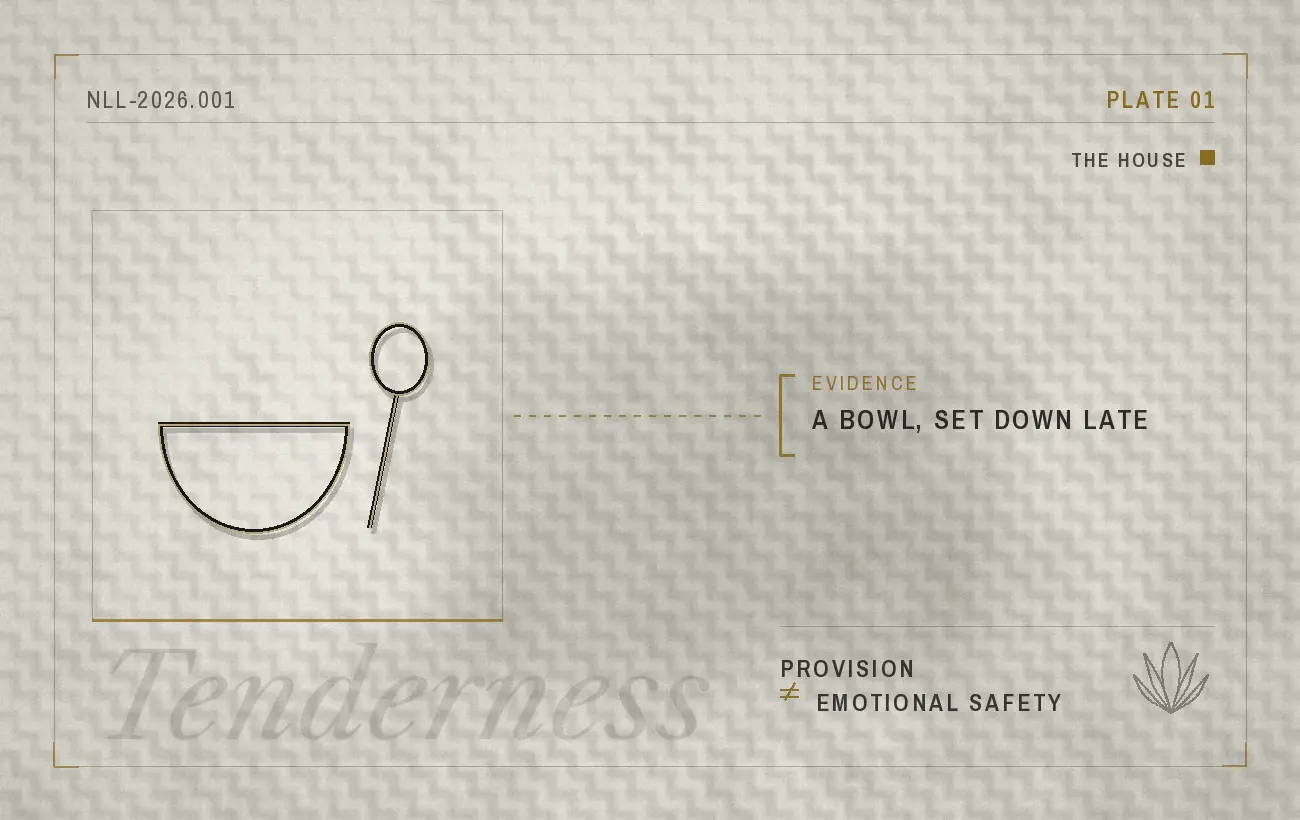
This poem holds two experiences the speaker once believed could not coexist: being deeply provided for and being afraid of the person doing the providing. Food, clothing, education, and responsibility read as devotion. Correction and emotional hardness read as the absence of safety.
It does not settle the contradiction by declaring one version of the parent true and the other false. It asks whether love can be genuine while the form it takes still causes harm. A parent may have learned to express tenderness through provision because tenderness itself was never available to them, an inheritance that can explain the behavior without changing its effect on the child.
What became visible
Intellectual value
Refuses the choice between “she loved me” and “she hurt me”: both can be true. What a parent intends and what a child experiences are two separate facts.